Monday, January 29, 2007

Google
 

Choosing A Sony Lcd Tv

Choosing A Sony Lcd Tv by Peter Thomas


If you've watched a soccer match at any sports pub recently, you've probably seen the large screen television on the wall, with its amazingly sharp and fluid picture, and gone through a bit of envy. These gigantic displays have come down in price by nearly forty percent since the start of 2006, and there are several competing manufacturers and models to choose from.
First, slightly over half of the broadcasters in the UK broadcast digital high definition signals, and the number is expected to grow. HDTV signals are broadcast in a standard called 1080i or 1080p. "1080" is the number of scan lines the broadcast supports, and i and p at the end mean "interlaced" (less expensive, and slightly more screen flicker) or "progressive scan" (higher end). By comparison, the PAL resolution of 352 by 288 is roughly one 12th the screen resolution..


Digital TV displays are typically in a 16:9 aspect ratio, similar to what's used in cinema. This allows a more immersive display. However, not all HDTV displays are made equal; some economize and run at 1366 x 768 resolution, rather than the full 1920 by 1080 standard. Typically, those that do are less expensive, or last year's models.


Where the models from Sony differ from other companies is in the electronics behind the display. Sony TVs use a patented display colour matching system called BRAVIA which uses real time computational matching to bring added warmth to the otherwise cooler digital colour palette. Other places where Sony stands to shine is in its backlighting system, which is very robust. Overall, Sony's TV quality is excellent, though at upwards of 50 kilos for the largest models, you'll want to dispense with the floor stand and have it professionally mounted on your living room wall.


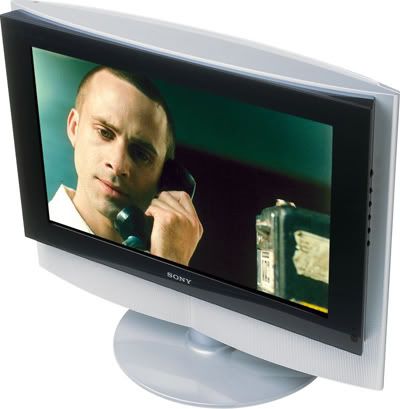
Specific model recommendations are the KDL-52X2000, which is a monster 52" (132 cm) display. It consumes nearly 300 watts in operation, which is amazingly low given its size. With a depth of 13 cm, it's thick enough to hang on a wall, though you'll want to make sure that it's got adequate ventilation. We found this online store that sold Wall brackets suitable for the Sony TVs, http://www.tv-wall-brackets.co.uk/. It comes equipped with Dolby-surround capable speakers included, at 22 total Watts (11 watts per channel), giving excellent sound quality.
For those on a slightly more limited budget (the KDL-52X2000 costs almost five thousand pounds), there are a range of options. The KDL-46X2000 has nearly identical features, but sacrifices 6 inches (13 cm) of diagonal display area, but costs 2,000 pounds less. The next size smaller has nearly the same feature set (losing a bit of programmability), but is a mere 2,000 pounds retail. Going below that model, we get into "HD Ready" TVs that support the lower resolution mentioned above - they can be had for bargain prices as many local vendors are trying to unload them quickly. Models to look for are the nearly the same - replace the X in the product codes above with a V.


About the Author
Peter Thomas is an experienced sales advisor for http://www.plasma-television.co.uk/ - the UK's leading Plasma TV comparison Website.
Google
 

Finding The Way With GPS Navigation


Finding The Way With GPS Navigation by Michelle Bery


For any of us who have been lost while driving, the road map has been our guiding light, identifying roadways and landmarks to help us find our way. But gone are the days of tri-folded paper maps that require the use of illumination and attention taken from the road. The modern Global Positioning System - or GPS - has transformed the process by which we find our way. But, contrary to popular belief, GPS navigation is not a new invention designed for strictly consumer use.

The Global Positioning System marked its beginnings in the 1970s but seeds of its existence were sown prior to that. We first saw the possibilities of satellite navigation with the launching of Sputnik in 1957. Russian scientists who were monitoring the progress of Sputnik found that they could track its movement based on radio waves; this set the foundation for GPS. The U.S. Navy used an elementary form of GPS in the 1960s when they used six satellites to help their submarines pinpoint their location. But GPS as we know it was designed and implemented by the U.S. Department of Defense in 1978 when they launched the first operational satellite.

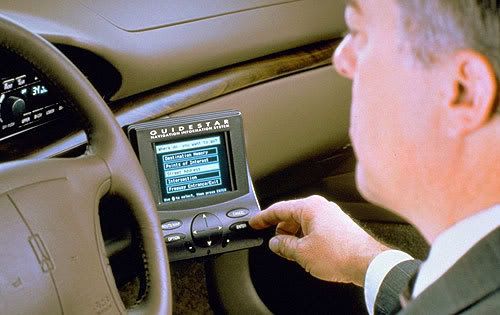
Today, 24 satellites circle the earth and provide an enormous amount of information in terms of plotting location. A derivative of this technology in modern times has been GPS navigation - a system that allows drivers to map their routes. GPS navigation comes in a portable unit that can be removed and transferred from vehicle to vehicle when needed. But because of the growing popularity associated with this system, GPS navigation units are now mounted as standard equipment in newer cars. Of course, GPS navigation is also essential to water navigation as used by boats and ships.

But GPS navigation is not solely for the use of vehicles. Outdoor enthusiasts - with an eye towards safety - will often carry a hand-held GPS navigation device; the modern equivalent of a compass.

GPS navigation has allowed us to explore new terrain as we venture forth with confidence, knowing that, no matter what, we will find our way.


About the Author
For easy to understand, in depth information about GPS visit our ezGuide 2 GPS.
Google
 

Computers: a Blessing Or a Curse?


Computers: a Blessing Or a Curse? by Sharon White


Computers play an important role in the lives of most of us today,

whether we realize it or not. Almost every home, office or school has a computer of some kind these days. Many people feel that these machines are now an essential part of our lives, while others are beginning to ask if we really need them.


So, how necessary are they really? One of the main advantages is the time that can be saved by using a computer. Stored information can be found at the touch of a button, whereas searching for it manually takes much longer. This is especially beneficial in the workplace, where employees can do their work far faster than they could in the past.


Therefore, our everyday lives are made easier - from going to bank to doing shopping. Computers can also save a lot of storage space. Storing information on computer discs is one of the most efficient ways of keeping data. One computer disc, for instance, can hold the same amount of information as several books. In addition to this, computers can be educational and fun. From a very young age, children can gain basic computer skills through programmes that allow them to learn, draw, paint and play.


In today's technological world, this knowledge can only help them in the future. However, there're various negative aspects to using computers. Many jobs have been lost due to the fact that computers can do a lot of tasks more efficiently than humans. This has led to high unemployment in many countries.


What is more, computers can actually cause health problems. Endless hours in front of a screen can cause eye strain and headaches, which are serious side-effects. There are people who claim that computers are unnecessary and make our lives more complicated. They argue that in the past we managed very well using other methods and that we have become too dependent on computers.


However, they fail to consider that the time saved by using computers for repetitive tasks enables us to use our own time more creatively and productively. To sum up, it seems that computers are a useful addition to our fast-moving world of high technology. They have changed our live for better and there is no reason why we should not make them work to our advantage. However, it must be remembered that they are here to serve us- not to replace us.


About the Author
The article was produced by the writer of masterpapers.com. Sharon White has many years of a vast experience in Term Papers writing and accounting term paper writing consulting.

Sunday, January 28, 2007

Google
 

The Internet Explorer Revolution


The Internet Explorer Revolution by P. Willis

The Good And The Bad OF Internet Explorer

As the internet has evolved and become part of everyday life, Internet Explorer has also become a household name, used numerous times each day by the majority of internet users. As with any market, Internet Explorer needs to keep it's competitive edge, offering regular updates and improvements on previous versions. The latest Internet Explorer package to be released is IE 7.0, and is expected to make a solid impression with increased security features and an improved user-experience.

Internet Explorer has listened to what it's customers need and want, and stepped up to the plate and delivered. For example: Internet security is by far one of the biggest concerns for all internet users, whether it be in a corporate environment, a small business, personal computer or a computer used by young children. Each internet user needs specific protection, so IE 7.o offers a wide range of security features, and the ability to turn features and restrictions on or off.

More Internet Explorer 7.0 improvements:

Increased Online Security - Protecting your computer from spyware that monitors your internet usage habits, records sensitive information (banking details, passwords etc...), as well as rejecting applications that will install annoying or malicious software on your computer without consent, this includes everything from basic adware to full scale virus software.

Adult Filters - One of the biggest threats online today is the ease in which children can access inappropriate material. With this security add-on, you can block adult content and trust your children will be safe online.

Pop-up Blocker - Stop annoying pop-ups ruining your online surfing experience.

Privacy - For this feature, you have better control access to sensitive information, as well as your personal internet surfing habits.

You will also find some extra add-ons for Internet Explorer 7.0 that will save you time by personalizing your browser settings. As you will see from the list below, the features can be very helpful if implemented correctly.

Auto-Fill Forms - If you expect to regularly be completing online forms (order forms etc...), now you can simple store address, account, and shipping information to easily and quickly populate online forms.

Business Tools - Rather than have your company do things differently in various locations or even departments, you can now streamline processes easily and efficiently.

Developer Tools - With this add-on for Internet Explorer 7.0, you will save tremendous time pertaining to programs, utilities, and tools.

Download Manager - Set your download options, applications and software updates to autopilot, for a time that suits you!

Live Feeds - Have your favorite news broadcasts, blogs, stock quotes, sports schedules and results sent directly to your desktop each morning or night.

Offline Browsers - Save websites and visit them at a later date... no internet connection necessary.

One of the most exciting developments of IE 7.0 is the graphic imagery add on options. These developments will increase your options online and generally enhance online user experience.

Animation Players - Allows you to produce, and visit interactive websites, mobile content, and digital applications.

Design Tools - This add-on allows you to add power and enhancement to your desktop publishing, digital design, or illustration.

Digital Photography - Gives you enormous flexibility when organizing, editing, uploading and sharing digital photos.
About the Author

Peter Willis provides free, unbiased reviews and information about popular software titles, as well as advice for making the most out of your software. He also offers comprehensive software reviews of lesser known software titles.